What can a painted papyrus reveal about the ancient Egyptian soul?
The Papyrus of Ani, a funerary manuscript dating to approximately 1250 BCE during the 19th Dynasty, offers one of the most vivid windows into the ancient Egyptian vision of death. In this elaborate document, a man named Ani is shown entering a grand chamber where a large balance scale dominates the scene. According to the British Museum, which houses many such artifacts, this image is not a standalone work of art but a central vignette belonging to a collection of incantations, spells, and prayers known as the Book of the Dead. These texts were intended to guide the deceased through the complex and often dangerous landscape of the afterlife, and the trial at the scales was the most critical hurdle of all.
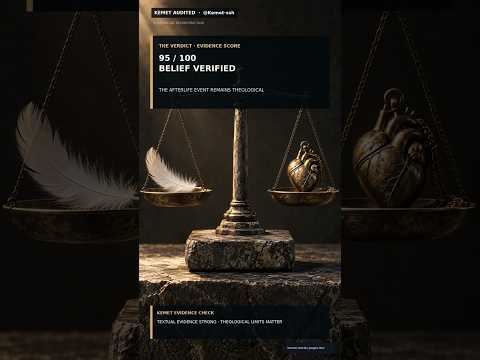
Research into the Papyrus of Ani reveals a precise arrangement of figures and symbols that researchers use to decode Egyptian theology. On one side of the balance sits a small vessel containing Ani’s heart, while on the other sits a single white feather. This feather represents Maat, the goddess of truth, justice, and cosmic order. The evidence from the 19th Dynasty suggests that for Ani and his contemporaries, the judgment was a moment of absolute accountability where one’s moral character was literally measured against the standards of the universe.
While the Papyrus of Ani is often cited as the primary example of this ritual, excavation reports and museum collections show that the imagery was widespread across different eras of Egyptian history. The Metropolitan Museum of Art notes that these depictions appear in various forms, from large-scale papyri to smaller fragments. This consistency suggests that the concept of the heart being weighed was a core component of funerary belief for over a millennium. However, scholars must differentiate between the high-quality manuscripts commissioned by the elite, like Ani, and the more modest versions found in other burials, which suggests that the ritual was a universal expectation regardless of social status.
How does the Book of the Dead function as evidence?
The term Book of the Dead is a modern name for a series of texts the Egyptians referred to as the Spells for Coming Forth by Day. According to the Metropolitan Museum of Art, this was not a single, uniform book like a modern religious text but rather an evolving collection of religious compositions. No two copies are exactly alike, as the spells included were often selected based on the preferences or wealth of the deceased. This variation provides a challenge for historians trying to pin down a "standard" version of the afterlife, as the content of the spells could change significantly between dynasties.
One of the most significant pieces of evidence for the weighing ritual is found in the Greenfield Papyrus, cataloged as EA10554,80 by the British Museum. This manuscript dates to the Third Intermediate Period and contains what is known as Spell 125. This specific spell is the primary textual source for the judgment process. It provides the script for the "Negative Confession," where the deceased must stand before a panel of divine judges and declare their innocence of various sins. The Greenfield Papyrus confirms that the heart-weighing was the physical manifestation of this verbal testimony, ensuring that the spoken word matched the internal truth of the heart.
The evolution of these texts suggests that the ritual was not static. Researchers infer from the variety of surviving papyri that the inclusion or abbreviation of certain spells might reflect regional variations in funerary practices or shifts in theological focus. For example, while Spell 125 is a common feature in many extensive papyri, some shorter versions omit the visual representation of the scales entirely, focusing instead on the magical protection of the body. This indicates that while the weighing of the heart was a central belief, the specific way it was recorded or invoked could vary based on the historical context and the resources of the individual.
Why was the heart singled out as the seat of identity?
In modern science, the brain is recognized as the center of consciousness, but for the ancient Egyptians, the heart held this distinction. According to sources from the PMC/NIH, the heart was regarded as the literal seat of memory, emotion, and identity. This belief explains why the heart was frequently left inside the body during the mummification process, as it was considered the seat of identity. The evidence suggests that without the heart, the deceased would lose their personality and their ability to testify during the judgment in the Hall of Truth.
The theological importance of the heart is further evidenced by the use of "heart scarabs." These were large stone amulets carved in the shape of a beetle and placed over the heart of the mummy. According to British Museum records, these amulets were often inscribed with Spell 30B of the Book of the Dead. This spell was a magical intervention designed to prevent the heart from "rising up" or testifying against its owner during the judgment. The existence of Spell 30B reveals a fascinating tension in Egyptian belief: while the heart was the source of truth, there was a profound fear that it might reveal sins the deceased had forgotten or hoped to hide.
Scholars debate the extent to which this was viewed as a literal physical process versus a psychological metaphor. Some researchers argue that the weighing of the heart was a symbolic representation of a person’s conscience. However, the consistent presence of heart scarabs in archaeological contexts suggests a more literal concern. The Egyptians believed that the heart had its own agency and could act as an independent witness. By using Spell 30B, the deceased sought to bind their heart to their own will, ensuring a favorable outcome at the scales regardless of their past actions.
Who were the divine observers at the scales of Maat?
The weighing ritual did not occur in a vacuum; it was a highly regulated legal proceeding conducted in the presence of the gods. The Metropolitan Museum of Art identifies the god Osiris as the central figure of this judgment. As the god of the afterlife and the underworld, Osiris presided over the Hall of Truth, where he sat on a throne observing the proceedings. His presence confirmed that the trial was the final step before the deceased could be admitted into the "Fields of Reeds," the Egyptian version of paradise.
Ancient Egyptian texts show that the god Osiris acted as the ultimate authority during the judgment, yet the actual work of the trial was performed by a complex hierarchy of subordinate deities.
According to the Papyrus of Ani and other 19th Dynasty sources, the jackal-headed god Anubis was responsible for the technical operation of the scales. He is typically shown kneeling by the balance, adjusting the weights and ensuring the scale is perfectly level. Nearby, the god Thoth, often depicted with the head of an ibis, stands ready with a palette and reed pen. Thoth’s role was that of a divine scribe, recording the result of the weighing to ensure that the verdict was permanent and indisputable. This emphasis on record-keeping and procedural accuracy highlights the Egyptian view of the afterlife as an extension of their own highly organized legal and bureaucratic systems.
Beyond the primary gods, the deceased also had to face a panel of forty-two judges. These minor deities each represented a specific sin or a specific region of Egypt. The presence of these judges is documented in the vignettes associated with Spell 125, such as those found in the Greenfield Papyrus. While the heart was being weighed, the deceased had to face a panel of forty-two judges, often declaring their innocence of specific transgressions before them. This dual process of physical weighing and verbal confession created a multi-layered system of judgment that left little room for error.
What happened to those who failed the trial?
The consequence of a heart that was heavier than the feather of Maat was catastrophic and final. Funerary art frequently includes a monstrous figure known as the "Devourer," or Ammit. This creature is usually depicted with the head of a crocodile, the forequarters of a lion, and the hindquarters of a hippopotamus—three of the most dangerous animals known to the Egyptians. According to the British Museum, Ammit sat at the foot of the scales, waiting for the verdict. If the heart was found to be heavy with sin, it was believed that she would consume it, resulting in "the second death," which meant total non-existence and the end of any hope for an afterlife.
Despite the prevalence of Ammit in funerary art, her theological evolution remains a subject of ongoing study. Scholars have noted that the specific iconography of the Devourer varies significantly across different papyri and dynasties. In some versions, she is a prominent and terrifying figure, while in others, she is smaller or omitted entirely. This variation raises questions about how literally different segments of the population viewed the threat of total annihilation. Some scholars argue that Ammit served as a symbolic deterrent, while others suggest her role was a literal part of the underworld’s ecosystem.
The Metropolitan Museum of Art’s collection includes fragments from the Ptolemaic Period, dating between 230 and 150 BCE, which show that the threat of the Devourer remained a central theme late into Egyptian history. However, there is no archaeological evidence of "failed" judgments in the form of papyri. This is because the Book of the Dead was intended to ensure success; no Egyptian would pay for a manuscript that depicted their own failure. Therefore, our knowledge of the judgment’s negative outcome comes strictly from the descriptions of what the spells were designed to avoid, rather than historical accounts of "condemned" individuals.
How long did these beliefs persist in Egyptian society?
The longevity of the weighing of the heart ritual is one of its most remarkable features. Evidence from the Metropolitan Museum of Art shows that funerary papyri depicting the judgment before Osiris were still being produced during the Ptolemaic Period, roughly 1,000 years after the Papyrus of Ani was written. This suggests that the core ethical and theological framework of the ritual survived the arrival of Greek influence and significant political changes. The consistency of the iconography, such as the scales and the feather of Maat, indicates that the concept of moral accountability remained a foundational cultural value.
However, there were shifts in the way these beliefs were expressed over time. During the Third Intermediate Period, as seen in the Greenfield Papyrus, there was a high degree of detail in the textual spells and the visual vignettes. By the Ptolemaic Period, some scholars observe a trend toward more stylized or abbreviated representations. The Metropolitan Museum of Art’s Ptolemaic fragment (ca. 230–150 BCE) demonstrates that while the essential elements of the ritual were preserved, the artistic style and the arrangement of the figures had evolved to suit the tastes of a later era.
Archaeological evidence from the Ptolemaic Period confirms that the belief in the weighing of the heart remained active in Egyptian society for at least 1,500 years.
This longevity allows researchers to track the continuity of Egyptian thought. The persistent use of Spell 125 and the imagery of the balance suggests that the Egyptians maintained a consistent view of the relationship between the individual and the cosmic order. While other aspects of religion might change, the belief that one’s actions in life would be weighed in death was a stabilizing force in Egyptian culture. It provided a clear ethical code that applied to everyone from the pharaoh to the common citizen, reinforcing the idea that justice was a universal law that even the gods had to respect.
What remains unknown about the weighing of the heart?
While the primary sources like the Papyrus of Ani and the Greenfield Papyrus provide a wealth of information, there are several areas where the evidence remains inconclusive. One of the most significant debates among modern scholars concerns the functional variation of the texts. It is currently unknown why certain spells were included in some manuscripts but omitted in others. While researchers infer that this might be due to the wealth of the deceased or regional preferences, no surviving Egyptian text explicitly explains the criteria for selecting specific spells.
Another open question involves the role of the average citizen compared to the elite. Most of our evidence comes from high-status burials, where the deceased could afford an expensive, customized papyrus. It is difficult to determine how much of this complex theology was understood or practiced by the general population who could not afford such elaborate funerary equipment. Some researchers argue that the core concepts were likely shared across all levels of society through oral tradition and public religious festivals, but the physical evidence for this is sparse compared to the rich manuscripts found in elite tombs.
Finally, the transition from literal belief to theological metaphor is still being studied. Did the average Egyptian truly believe that a physical scale would appear in a hidden chamber of the underworld? Or was the weighing of the heart understood as a symbolic way to describe the evaluation of one’s character? The existence of Spell 30B and heart scarabs points toward a literal interpretation, as these magical tools were designed to physically affect the outcome of the trial. Yet, the high level of abstraction in Egyptian art suggests that they were also comfortable with complex metaphors. This tension between the physical and the symbolic remains one of the most intriguing aspects of ancient Egyptian studies.
Why does the evidence for the weighing of the heart still matter?
The study of the weighing of the heart ritual is more than a pursuit of ancient curiosities; it provides a direct link to the origins of human ethics. The evidence from the Book of the Dead shows that as early as the 19th Dynasty, and likely much earlier, a sophisticated civilization had already developed a system of accountability that transcended earthly life. According to the PMC/NIH, this belief in a final judgment helped shape the moral framework of a society that lasted for thousands of years. It established the idea that one’s identity and memory were tied to their integrity, and that truth was a cosmic force that could be measured.
The fact that this ritual is verified through consistent iconography and funerary texts gives scholars a high degree of confidence in our understanding of Egyptian afterlife beliefs. The historical record for this topic is exceptionally robust, reflecting the strength of the archaeological evidence. From the Papyrus of Ani in the British Museum to the Ptolemaic fragments in the Metropolitan Museum of Art, the evidence for the weighing of the heart is both deep and wide. It shows a culture that was deeply concerned with the concept of "Maat," or order, and the belief that the universe was ultimately a fair and just place.
Ultimately, the weighing of the heart represents a profound psychological insight into the human condition. The ancient Egyptians recognized that our actions and our conscience define us. Whether through the magical protection of a heart scarab or the solemn recitation of Spell 125, they sought to ensure that their identity would survive the transition into the unknown. By examining these artifacts and texts, we gain not only a clearer picture of their history but also an appreciation for the enduring human desire for justice and the preservation of the self. To understand the scales of Anubis is to understand the heart of ancient Egypt.
Watch the Kemet filmFirst published on Kemet (kemetstories.com) · reference KMT-EA1C92
← Back to the archive